
Download PDF (English, Chinese)
50 Years of Trials and Tribulation: Part I — A Brief Review of the Development History of Intelligent Compaction (3)
(4) The 2000s: Following the turn of the millennium, a continuous stream of various compaction control technologies was introduced. BOMAG and AMMANN, in particular, each launched a new generation of rollers featuring integrated mechanical control parameters (specifically, modulus or spring stiffness), serving as a benchmark for elevating both the quality of construction machinery and overall construction standards. Concurrently, the inherent limitations of the Compaction Meter Value (CMV) were becoming increasingly apparent to users, a realization that spurred the development of improved technologies based on the fundamental principles of compaction metering.
• BOMAG successfully integrated its proprietary technology—capable of continuously monitoring the modulus of the compacted fill material (Evib)—with specific roller models (featuring automatic amplitude adjustment). This integration made the technology an integral component of these new rollers—effectively equipping the machine with a “brain.” This innovation ensured that the compaction process was no longer a “blind” operation; instead, it enabled continuous real-time monitoring of the modulus during rolling and allowed the roller to automatically adjust its amplitude in response to changes in the measured modulus. These new-generation rollers possessed nascent autonomous construction capabilities and were categorized into two specific types: vibratory rollers designed for compacting soil and rock fill (introduced in 2000) and vibratory rollers designed for compacting asphalt mixtures (introduced in 2001).
• Switzerland-based AMMANN introduced the first vibratory roller equipped with its integrated Compaction Control System (ACE) to the United States in 2001; the primary control parameter utilized by this system was the spring stiffness coefficient (Kb).
• The U.S. company Caterpillar (CAT) introduced a compaction control technology specifically designed for static rollers in 2003, utilizing the Machine Drive Power (MDP) as its primary control parameter.
• Building upon the principles of compaction metering, Japan’s SAKAI Corporation refined the traditional CMV metric by incorporating multiple harmonic components into its analysis, thereby deriving a new evaluation parameter known as the Compaction Control Value (CCV) in 2004.
• The term “Intelligent Compaction” made its debut in 2004, appearing within the “FHWA Intelligent Compaction Strategic Plan” published by the U.S. Federal Highway Administration (FHWA). Initially, the concept was defined as a combination of “Compaction Meter Value (CMV) + GPS,” with the added capability to monitor and track the number of roller passes.
• A 2006 research report by the Minnesota Department of Transportation (MnDOT) concluded that there was a poor correlation between CMV readings and the results obtained from traditional testing methods (MN/RC-2006).
• Starting in 2008, China’s Ministry of Railways initiated a specialized research program—led by Southwest Jiaotong University—focused on a comprehensive suite of technologies for continuous compaction control in high-speed railway subgrades. This program encompassed theoretical methodologies, testing techniques and equipment, engineering applications, and technical standards, thereby laying the foundation for the formulation of China’s first industry standard for continuous compaction.
• Through the TPF (Pooled Fund Program for Transportation Research, 2008), the United States launched a series of initiatives aimed at promoting and implementing intelligent compaction technologies.
• In November 2009, during the construction of the 1,776-kilometer Lanzhou–Xinjiang High-Speed Railway, China became the first nation to adopt continuous compaction control technology along the entire length of a railway line for construction process monitoring. This milestone marked the beginning of the widespread adoption of this technology throughout China.
Commentary: For the field of continuous compaction control, the decade spanning 2000 to 2009 was relatively quiet. Although compaction meters possess inherent limitations, their algorithms were fully open-source, and the manufacturing of the associated measurement equipment was relatively simple. Consequently, instrument manufacturers continued to produce various models of compaction meters (while many manufacturers ceased using the specific acronym “CMV,” the underlying technology remained, in essence, that of a compaction meter), leaving end-users with limited alternatives. Regarding improved compaction control technologies, the mainstream products that emerged were not compaction meters incorporating higher-order harmonics; rather, they were “CMV + GPS” systems—representing the nascent stage of “intelligent compaction” technology. These systems gradually evolved to prioritize the control of parameters such as the number of roller passes, roller coverage patterns, and rolling speed, thereby circumventing the inherent shortcomings of the CMV metric. As for compaction monitoring products that utilize mechanical quantities as their primary control metrics, their market share remains quite small. This is directly attributable to the fact that such advanced technologies are typically integrated directly into specific roller models, a factor that has, to some extent, hindered the widespread adoption of advanced intelligent compaction technologies (Level 3).
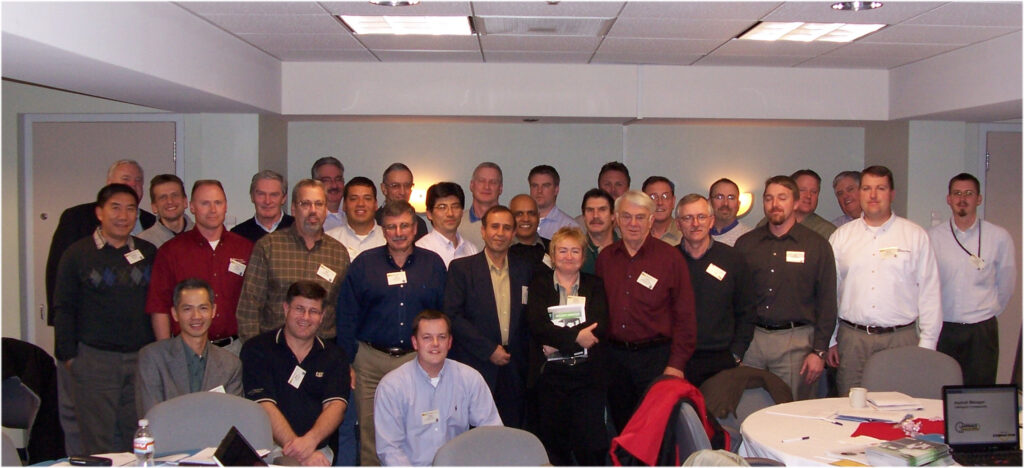
Figure 1: In 2008, the U.S. Transportation Pooled Fund Program initiated a sustained, more than two-decade-long effort focused on the promotion, training, procedural development, and implementation of intelligent compaction technologies.