
Download PDF (English, Chinese)
Commemorating 50 Years of Intelligent Compaction — The “50 Years of Trials and Tribulations” Series
[Editor’s Note] Since intelligent compaction incorporates measurement instrumentation, this technology has been intertwined with commercial interests from its very inception. Amid the interplay of academic knowledge and competing schools of thought, and the clash of commercial interests and business entities, various disputes have frequently arisen; indeed, the past 50 years can truly be described as a journey through “trials and tribulations.” To commemorate the 50th anniversary of intelligent compaction, ISIC is launching a special article series titled “50 Years of Trials and Tribulations.” This series will be published in several installments and will primarily cover a retrospective of technology’s developmental history, its current status, and the challenges it faces, and strategies for overcoming these difficulties.
“50 Years of Trials and Tribulations” Series Part 1 — A Brief Retrospective on the Development of Intelligent Compaction (1)
The process by which loose granular materials are transformed into a cohesive structural body is fundamentally compaction via rolling. How to effectively monitor and control the compaction quality of the fill material *during* the rolling process has long been a central focus of road construction technology. Since the rolling process is performed by road rollers, attention naturally turned to whether the rollers’ dynamic vibration response data could be used to assess compaction quality. The answer, as it turned out, was a resounding “Yes!” This concept forms the very foundation of intelligent compaction technology. Spanning the period from 1976 to 2026, this journey has truly been one of navigating through storms and challenges; a great many events have transpired along the way, and here we present a brief retrospective highlighting some of the most significant milestones.
(1) The 1970s:
During the 1960s, researchers in the United States proposed using the dynamic vibration response of a vibratory roller—captured *during* rolling—to provide a continuous assessment of compaction quality. However, due to the technological limitations of measurement equipment at the time, this concept could not be successfully realized. In 1974, Heinz Thurner (an Austrian national and civil engineer at the Swedish National Road Administration) conducted a series of vibration response experiments using a 5-ton towed vibratory roller manufactured by DYNAPAC. The subsequent analysis of the results revealed a distinct correlation between compaction efficacy and the ratio of the amplitude of the roller’s first harmonic to that of its fundamental frequency. In 1975, Heinz Thurner joined forces with Åke Sandström (a Swedish national) to co-found the company GEODYNAMIK, dedicated to research and development focused on the continuous measurement and assessment of compaction quality data.
• In 1976, GEODYNAMIK developed a measurement device for DYNAPAC that could be mounted on a vibratory roller to continuously evaluate compaction quality during the rolling process. This device became known as the “Compaction Meter.” Its evaluation (or control) parameter was the renowned CMV (Compaction Meter Value), which is used to assess the degree of distortion in the vibratory drum’s response waveform during rolling. As for why this specific ratio was adopted, no extensive theoretical basis was provided; it was likely a result derived from experimental observations. This is also the primary reason why 1976 is designated as the inception year of “Intelligent Compaction.”
• The formal application of the Compaction Meter in engineering construction projects began in 1978—for instance, at the Jaktan Hydropower Plant project in Sweden. Concurrently, other entities (including universities and roller manufacturers) also began developing their own versions of the Compaction Meter.
(2) The 1980s:
Due to the simplicity of the Compaction Meter’s underlying principles—and the relative ease with which its hardware could be implemented and manufactured—the concept of utilizing the dynamic response of vibratory rollers to control compaction quality garnered significant attention shortly after its emergence, particularly in certain countries (primarily in Northern Europe). Specifically, roller manufacturers in several Nordic nations began developing measurement equipment based on the Compaction Meter’s principles and integrating them into practical engineering applications. At the same time, however, voices of skepticism regarding the CMV also began to surface.
• The term “Continuous Compaction Control” (CCC) was coined (by Heinz Thurner, Åke Sandström, and others at the International Conference on Compaction in Paris, 1980).
• In 1983, GEODYNAMIK introduced a Compaction Meter product specifically designed for oscillatory rollers, utilizing the OMV as its control parameter. As research progressed, the company launched a documentation system capable of recording compaction data—known as “The CDS System”—in 1988.
• In 1982, the German company BOMAG (a roller manufacturer) became the first to integrate CCC technology—specifically, various versions of the Compaction Meter—directly into its rollers. Subsequently, in 1983, the company began developing a distinct CCC product known as the Terrameter BTM 01; this system utilized an energy-based metric—dubbed the “Omega Value”—as its primary control parameter. The Terrameter BTM 01 departed from the harmonic-ratio principle traditionally employed by compaction meters, shifting instead toward mechanical parameters with true physical significance; simultaneously, it highlighted the inherent limitations of the CMV (Compaction Meter Value) metric.
• In China, water conservancy authorities introduced compaction meter technology for use in the compaction control of dams (specifically, Roller-Compacted Concrete) in 1988. During this same period, manufacturers of road rollers began experimenting with equipping their vibratory rollers with compaction meters—using devices sourced from both foreign suppliers and domestic electronics developers—yet these efforts ultimately failed. The fundamental reason for this outcome was that, in many instances, the CMV failed to accurately reflect the compaction quality.
• The Public Works Research Institute (PWRI) under Japan’s Ministry of Construction conducted a detailed investigation into the CMV. Their findings indicated that while the CMV proved effective for controlling the compaction of certain fine-grained materials, it was ineffective for coarse-grained materials (according to research reports published between 1985 and 1986). The study also proposed a methodology for correcting CMV readings by incorporating the influence of the 1/2-order harmonic and higher-order harmonics; this methodology subsequently served as the primary theoretical basis for the development of the CCV (Compaction Control Value) metric in Japan.
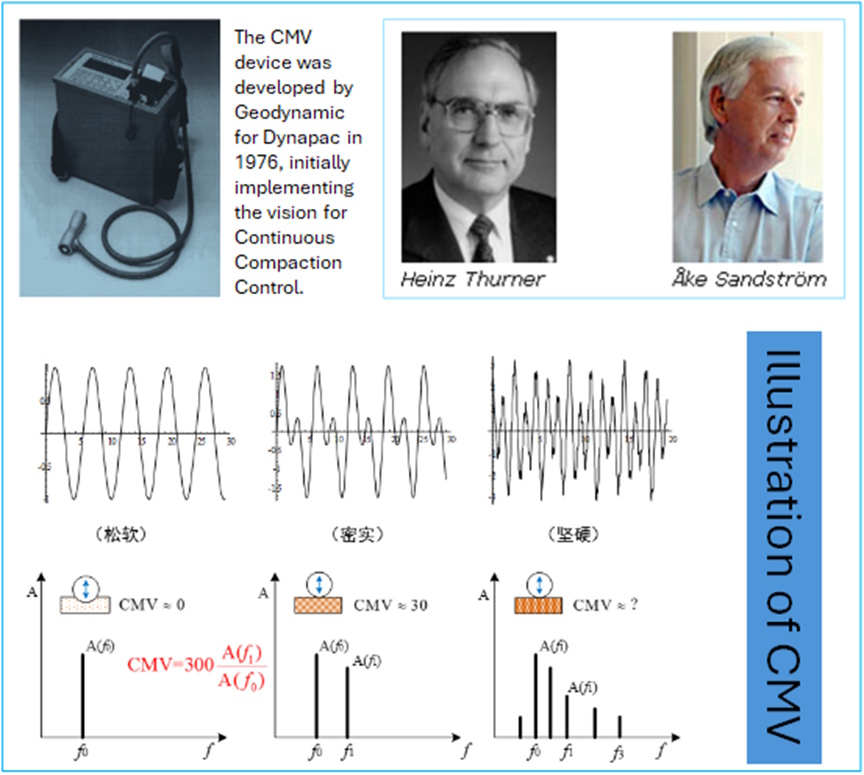
Figure 1: The First Compaction Meter and Its Inventors

Figure 2: Åke Sandström with Members of the Executive Committee of the International Society for Intelligent Construction (ISIC)
Antonio Correia (1st from left), Åke Sandström (2nd from left), George Chang (2nd from right), Soheil Nazarian (1st from right)
Note:
• The photograph in Figure 2 was taken during the 40th Anniversary Celebration of CCC (Compaction Control) held in Vienna, Austria, in 2018.
• A distinct school of thought regarding compaction meters in Europe posits that the very first device was manufactured in 1978; consequently, proponents of this view designate 1978 as the inaugural year of CCC.
• Out of respect for historical accuracy, we designate 1976 as the inaugural year of CCC.
Commentary:
The most significant achievement of this era was the emergence of a conceptual framework centered on a continuous compaction control process executed *during* the rolling operation itself, based on the vibratory roller’s dynamic response. Although the compaction meter (and its associated CMV metric) suffered from various shortcomings, these flaws in no way diminish its groundbreaking innovative nature! We owe a debt of gratitude to engineers Heinz Thurner and Åke Sandström for their exceptional contributions. It is no exaggeration to state that the remarkable strides achieved in the field of intelligent compaction today were originally inspired by this very concept.