
Download PDF (English, Chinese)
Analysis of Intelligent Compaction Series Part III: Supplement—The Current Status and Improvements in Filling, Paving, Compaction, and Control (2)

(Continued from the previous article)
(3) Compaction
Compaction is the process by which loose granular materials form a structural entity. It has historically been a focal point of attention across various sectors and is a subject with which most people are relatively familiar; therefore, it will not be elaborated upon in excessive detail here. Based on current developments, however, the following points warrant particular attention:
- Most compaction operations still adhere to traditional methods. However, the tonnage of the vibratory rollers employed is steadily increasing. In many instances, the roller tonnage is not properly matched to the specific characteristics of the fill material or the thickness of the fill layer.
- When a roller’s dual steel drums vibrate simultaneously, a phase difference inevitably exists between the vibrations of the two drums. This creates complex stress-wave interference in the zone between the front and rear drums—a phenomenon that does not always contribute to improving compaction quality. Conversely, a combination of a steel drum and a pneumatic tire roller is often better suited for compaction of asphalt mixtures (transforming the dual-steel-drum configuration into a steel-drum-plus-pneumatic-tire setup creates a synergistic combination of vibration and kneading).
- Most intelligent compaction control systems currently installed on vibratory rollers utilize Level 1 technology. These systems primarily focus on monitoring and controlling the number of roller passes and the coverage of roller tracks. Consequently, they do not significantly enhance the actual compaction quality. Furthermore, when compacting inherently non-uniform fill materials, applying a uniform number of roller passes across the entire area can inadvertently—and “artificially”—result in non-uniform compaction.
(4) Control
Control is a process that permeates the entire construction lifecycle and serves as the primary mechanism for ensuring construction quality. As in mechanical manufacturing, real-time, closed-loop feedback control (a concept to be defined in a subsequent article) should ideally be integrated at every stage of the process—from material selection and production to paving and compaction. Moreover, this control mechanism should function as an integrated system encompassing the entire “Material–Paving–Compaction” chain. However, this ideal state has not yet been fully realized; current practices remain predominantly reliant on open-loop, results-based control (specifically, acceptance testing).
Regarding control within the material production process:
The production of base course and surface course materials is typically carried out at a mixing plant, where quality control measures are relatively well-established and reliable. With respect to material mix proportions and aggregate gradation, the requirements stipulated in the design specifications can generally be met. In contrast, the production of subgrade materials tends to be a more extensive and less refined process; materials are typically sourced locally from nearby sites, and there is, by and large, a complete absence of feedback control mechanisms. Regarding control during the paving process: The primary focus is ensuring uniformity in thickness and material distribution (specifically, addressing segregation). For base-course and surface-course materials, feedback control systems—monitoring parameters such as thickness and smoothness—have already been successfully implemented. The problem of segregation has seen some degree of improvement through advancements in material mix design and paver technology. However, the paving of subgrade fill materials currently lacks substantial feedback control—including for parameters such as thickness and uniformity—and segregation between coarse and fine aggregates remains prevalent.
Regarding control during the compaction process:
Whether for subgrades, base courses, or surface courses, current practice relies on point-sampling inspections conducted *after* compaction is complete (a method known as “results-based control”; for details on specific control metrics, please refer to subsequent articles). Although some rollers are equipped with intelligent compaction control systems, the vast majority utilize only Level 1 technology, focusing primarily on controlling the number of roller passes. Furthermore, for granular materials with particle diameters exceeding 7.5 cm (typically subgrade fill), there currently exist neither standardized acceptance testing methods nor quantitative process control methods.
The above provides a brief overview of the current status of several critical stages within the construction process of fill structures. Given this status quo, the question of how to implement improvements is one that the engineering community must actively address. While it may not be possible to resolve every issue immediately, we must at least formulate appropriate countermeasures and implement them in phases.
A Side Note: Many people assume that the design and construction of fill structures (such as subgrades and pavements) are simpler than those of conventional structural engineering projects (such as bridges and buildings). In reality, this is far from the truth. If they appear “simple,” it is merely because their structural *forms* look uncomplicated; however, the underlying mechanical calculations involved are far more complex than those found in traditional structural mechanics. To this day, it remains impossible to accurately calculate the precise stress and strain distributions within subgrades and pavements; errors can sometimes exceed 50% (at such magnitudes, these can no longer be classified merely as “errors,” but should instead be termed outright “mistakes”). Moreover, quality control during the construction of fill structures is significantly more challenging than in conventional structural engineering, as it involves many more uncontrollable variables.
2. Improvement Measures
In response to the current state of the construction phase for fill structures, we must fully leverage modern technologies—particularly those associated with “intelligent construction”—to develop appropriate improvement measures tailored to specific field conditions. Outlined below are several conceptual approaches for such improvements, presented here for reference.
(1) Feedback Control in Aggregate Production
The core objective of aggregate production is the precise control of particle size and shape. Figure 2 illustrates a conceptual framework for implementing feedback control within the aggregate production process (for further details, please refer to the “Introduction” volume of this book series).
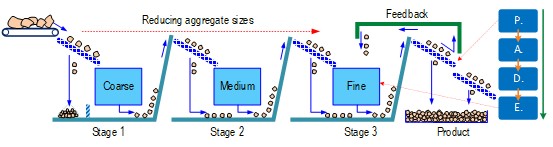
Figure 2: Conceptual Framework for Feedback Control of Aggregate Size and Shape
(Adapted from the “Introduction” volume of the book series)
(2) Feedback Control for Crushed Stone Aggregate and Soil Paving
For crushed stone and soil (including all coarse-grained materials), in addition to the uneven distribution of coarse and fine particles (segregation), issues regarding unreasonable gradation are also prevalent. In situations where there are no quantitative requirements for gradation and the particles are not subjected to screening, adopting intelligent technologies is a viable approach, as illustrated in Figure 3. Specifically, tasks related to improving gradation composition and distribution could be assigned to construction robots.
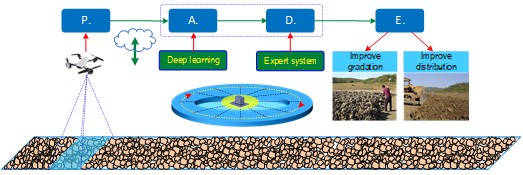
Figure 3: Approaches to Realizing Intelligent Paving for Coarse-Grained Materials
(Adapted from the “Introduction” volume of the book series)
Regarding quality control for the compaction of crushed stone and soil (where particle sizes mostly exceed 7.5 cm), the adoption of advanced intelligent compaction technologies currently appears to be a feasible technical route. By controlling compaction stability (specifically, the magnitude of stiffness variation), one can replace the traditional empirical method—often referred to as “proof-rolling” or “rolling until no wheel marks remain”—with a more precise approach. For further details, please refer to the “Intelligent Compaction” volume of this book series.
(3) Feedback Control for Enhancing the Paving Quality of Asphalt Mixtures
For asphalt mixtures, the objective is to achieve the highest possible initial density immediately after paving. Based on our previous research findings, we discovered that various combinations of paver process parameters significantly affect initial density; an optimal combination can increase it by more than 5%. Figure 4 illustrates a machine-learning-based method for capturing the vibration characteristics of the screed—an intelligent solution grounded in empirical data.
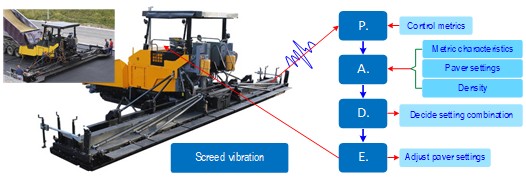
Figure 4: Feedback Control for Enhancing Paving Quality
(Adapted from the “Introduction” volume of the book series)
(4) Feedback Control During the Compaction Process
In earthworks and filling projects, compaction serves as the final step—and indeed the most critical construction process—in transforming loose granular materials into a cohesive structural body. Given that current practices remain predominantly reliant on traditional point-based control methods, the introduction of advanced intelligent compaction technologies has become imperative. Only through such means can real-time feedback control be achieved during the compaction process, enabling the acquisition of stiffness data for every specific point, which can then be utilized for various analyses and decision-making purposes; please refer to Figure 5.
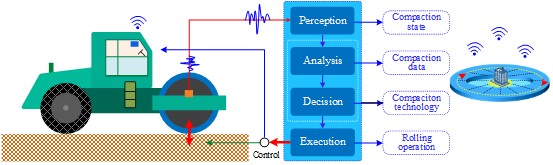
Figure 5: Application of Advanced Intelligent Compaction Technology During the Compaction Process
(Adapted from the *Intelligent Compaction* volume of the eponymous book series)
In summary, given the current state of construction practices, it is imperative to develop practical, feasible improvement strategies. Whether during the material production phase—where a complete transition to superior materials is often unrealistic—or during the paving and compaction phases, it is essential to reinforce real-time, closed-loop feedback control. Only through such measures can construction quality be genuinely enhanced, ultimately paving the way toward fully automated construction.
(End of Text)