
Download PDF (English, Chinese)
50 Years of Trials and Tribulations: Series Part II — The Current Status and Dilemmas of Intelligent Compaction (1)

In the previous series, we briefly reviewed the 50-year developmental trajectory of intelligent compaction. We now turn to a further elaboration on its current status and the dilemmas it faces. The reason for addressing this topic is that, as the adoption of intelligent compaction becomes more widespread—particularly with the rise of construction automation—the challenges it confronts have become increasingly prominent. These issues require clear analysis to identify viable pathways toward their resolution.
Compaction quality monitoring technology—originally based on the dynamic responses of road rollers—has evolved from “continuous compaction” to “intelligent compaction.” Although the conceptual scope of this technology has become quite rich, its current state of development remains unsatisfactory. Indeed, it could be said to be mired in a certain dilemma. To fully grasp this situation, we must begin by examining the four fundamental characteristics (or steps/processes) of intelligent compaction and assessing the developmental status of each. First, let us clarify the specific capabilities that intelligent compaction is expected to possess.
1. Capabilities Required for Intelligent Compaction
Intelligent compaction evolved from the foundation of continuous compaction, integrating various modern information technologies (specifically, “intelligent technologies” in the broad sense—refer to other articles from ISIC2026 or the introductory volume of this book series for further details). It operates within a closed-loop control paradigm comprising the sequence: Perception → Analysis → Decision-making → Execution. Its fundamental definition is clear: during the rolling process, it continuously uses perceived response signals from the road roller’s vibrating drum to derive compaction-quality control information. Through the autonomous learning of this control data—along with information on the fill material and rolling process parameters—it enables autonomous analysis, decision-making, and feedback control of compaction quality, thereby enhancing overall compaction quality (cited from the “Intelligent Compaction” volume of this book series).
A comprehensive understanding of intelligent compaction requires a detailed examination of the specific content and implementation methods for the four steps: “Perception,” “Analysis,” “Decision-making,” and “Execution” (see Figure 1). By clarifying these elements, one can gain a firm grasp of the essence of intelligent compaction.
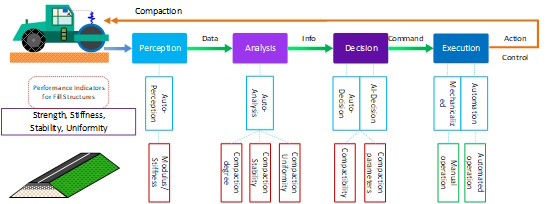
Figure 1: Content and Implementation Methods of Intelligent Compaction
Regarding “Perception”: Thanks to advancements in electronic technology, the realization of *automatic* perception (Note: the term “intelligent perception” is a misnomer, as this stage does not involve cognitive processing—that is the task of the “Analysis” stage) has become relatively effortless. The challenge in the “perception” phase lies in determining precisely what kind of information needs to be captured. The information (data) perceived by Level 3 technology primarily consists of the performance parameters of the fill material—specifically, its modulus or stiffness. This data serves as the fundamental basis for analyzing and making decisions regarding the compaction process.
The primary objective of the “analysis and decision-making” phase is to utilize the perceived modulus/stiffness data to assess the degree of compaction, compaction stability, and compaction uniformity of the fill layer. (These assessments also constitute the core control parameters for the compaction process, a topic that will be elaborated upon in subsequent articles.) This analysis enables informed decisions regarding the compaction plan and methodology—specifically, issuing instructions such as whether to continue rolling or which specific compaction process parameters to adopt. If the fill material meets the prescribed construction standards, the system can proceed with automated processing based on pre-established criteria (see subsequent articles for details). However, when the properties of the fill material are particularly complex, intelligent models must be employed to facilitate analysis and decision-making (with a particular emphasis on the decision-making aspect). This necessitates the training of AI models—a process of “learning” that constitutes the very essence of artificial intelligence. The inputs for these models include control data (such as modulus values), material data (such as aggregate gradation), and process data (such as vibration mass, excitation force, and vibration frequency). For further details, please refer to the “Intelligent Compaction” volume within this book series.
During the “execution” phase, the primary activity is for the machine operator to maneuver the roller to perform compaction operations in accordance with the system-generated decisions and instructions. The central focus here is adjusting the compaction methodology. This execution can be carried out in two distinct ways: First, the operator selects an action—such as stopping, continuing, or altering the compaction method—based on the instructions transmitted by the “decision-making” system. This represents a typical mode of mechanized construction and currently remains the predominant method in practice. Second, the roller automatically adjusts its compaction parameters based on the decision instructions (derived from a rigorous analysis of the fill material’s performance), thereby achieving semi-automated construction. (If this capability is further integrated with autonomous driving technology, the result is fully automated construction, or “construction automation.”)
It is worth noting that, in the context of intelligent compaction *per se*, neither satellite positioning nor autonomous driving technologies are strictly indispensable requirements (although they are indeed essential for achieving fully automated construction). Rather, they serve merely as enhancements—adding a finishing touch to the process. However, current trends in the field of intelligent compaction have tended to exaggerate the significance of these technologies—particularly that of satellite positioning. This point will be further elucidated in the discussion that follows.