
Download PDF (English, Chinese)
50 Years of Trials and Tribulations: Part III — Emerging from the Dilemma and Returning to the Essence of Intelligent Compaction

For embankment-type structures—a fundamental component of transportation infrastructure (including highway subgrades and pavements, railway subgrades, and airport runways)—the primary function is to withstand the repetitive application of traffic loads (from automobiles, trains, and aircraft). To achieve this objective, engineering machinery is employed to spread (using pavers) and compact (using rollers) loose fill materials, thereby transforming them into a structural body that meets specific performance requirements (strength, stiffness, stability, and uniformity). (Refer to the “Intelligent Compaction” volume of this series for further details.) This process constitutes the principal task during the construction phase; consequently, every technical measure adopted must serve this overarching goal.
Therefore, the ultimate criterion for evaluating the merit of a given technology is the extent of its contribution to the quality of the embankment construction. Any technology that actively enhances embankment quality is, by definition, superior. Intelligent compaction falls into this category; its essence lies in leveraging the full spectrum of modern technological tools to elevate the overall performance (strength, stiffness, stability, and uniformity) of embankment structures through comprehensive quality control exercised during the compaction process.
Currently, prevalent intelligent compaction systems primarily focus on controlling parameters such as the number of roller passes, rolling speed, and roller coverage patterns. To be candid, such control methods yield limited benefits—if any—in terms of enhancing the overall performance of the embankment body. In many instances, they may even prove counterproductive. For example, when applying a fixed pass count to fill materials characterized by inherent non-uniformity. Consequently, it is imperative to abandon these empirical methods—which predominantly rely on controlling the number of roller passes—and transition to advanced intelligent compaction technologies (Level 3). This entails using parameters such as modulus or stiffness to govern quality control during compaction (a topic that will be elaborated upon in subsequent articles). By monitoring and controlling factors such as compaction degree, stability, and uniformity, we can ensure that the embankment structure attains its requisite performance attributes (strength, stiffness, stability, and uniformity), as illustrated in Figure 1.
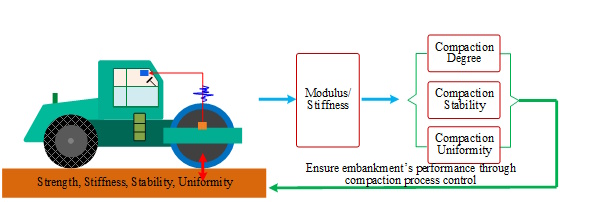
Figure 1: Ensuring Embankment Performance through Compaction Process Control
As depicted in the figure above, the key to overcoming intelligent compaction’s current limitations lies in the “sensing” phase. It is essential to accurately perceive and capture quality-related information regarding the embankment body. Only through such accurate perception can subsequent stages—targeted analysis of compaction quality data, decision-making, and precise execution of rolling operations—be effectively realized. Indeed, this capability constitutes the very cornerstone of automated construction!
So, how exactly can we guide intelligent compaction out of its current predicament? The answer, in fact, is quite simple: it is driven by *demand*! Only when project sites truly grasp precisely *what* aspects of compaction quality need to be controlled will this technology be able to successfully emerge from its current predicament.
In the past, because most construction professionals lacked a genuine understanding of intelligent compaction technology—and frequently conflated it with compaction *degree* testing (which is, in reality, merely density testing)—the field increasingly drifted away from the correct trajectory of intelligent compaction. Concurrently, the widespread adoption of the “compaction meter + satellite positioning” combination—coupled with the proprietary and monopolistic nature of Level 3 (L3) technology—exacerbated the situation, adding insult to injury.
Today, thanks to the prevalence of the “compaction meter + satellite positioning” approach, an increasing number of engineering professionals have become familiar with the term “intelligent compaction.” They have also gradually come to recognize the critical importance of controlling compaction *degree*, *stability*, and *uniformity*—and, in doing so, have begun to demand higher standards of accuracy in these control processes. Consequently, the time has now come to set the record straight and restore clarity to the field. The moment is ripe to popularize advanced intelligent compaction technologies (Level 3 and above), as the necessary preconditions for intelligent compaction to break free from its current impasse have finally been met.
The next challenge lies in overcoming the proprietary and monopolistic barriers surrounding Level 3 technology. This is a thorny issue: while it is clearly neither feasible nor realistic to expect the few manufacturers currently monopolizing this technology to voluntarily relinquish their proprietary rights, they should, at the very least, lower their prices to make the technology affordable for average users. The prerequisite for meeting this demand is an increase in on-site market demand, which would create an economic environment conducive to a “low margins, high volume” business model.
Furthermore, provided that on-site demand persists, we are confident it will attract more researchers to the field, potentially leading to the development of even more viable algorithms. In parallel, the ISIC is mobilizing its resources to drive down the cost of Level 3 technology—making it accessible to average users and enabling its application across the entire spectrum of standard vibratory rollers.
In summary, as acceptance and appreciation of intelligent compaction technology continue to rise within the construction industry, the “springtime” of intelligent compaction is fast approaching. Let us watch with anticipation as this future unfolds.
**Editor’s Note:**
This marks the conclusion of the “50 Years of Trials and Triumphs” article series, launched to commemorate the 50th anniversary of intelligent compaction technology. In our upcoming articles—drawing on the content of the book *Pioneers of Intelligent Construction: Intelligent Compaction*—we will undertake an in-depth analysis and discussion of various facets of intelligent compaction from multiple perspectives, covering everything from theoretical foundations to the practical challenges encountered in engineering implementation. Everyone is welcome to attend the discussion in the comments section.