
Download PDF (English, Chinese)
Analysis of Intelligent Compaction Part IV: Supplement—A Critical Examination of the “Resonance Theory” in Vibratory Compaction (2)

(Continued from previous article)
3. Do Embankment-Type Structures Possess Natural Frequencies?
As previously stated, natural vibration frequencies exist within structural systems capable of vibrating; a prerequisite for such vibration is that the structural system’s geometric dimensions must be finite.
If the geometric dimensions of a structural body are infinite, vibration phenomena generally do not occur; instead, only wave phenomena are observed (specifically, the propagation of vibrations—for details, please refer to the discussion on wave phenomena in the volume *One-Dimensional Dynamics and Applications in Engineering* within this book series). Consequently, while the concept of natural frequency is central to structural dynamics, the term “natural frequency” does not appear in the field of elastodynamics (which primarily focuses on the study of wave propagation in elastic bodies). Instead, elastodynamics employs concepts such as wavelength, wave velocity, and wave frequency—three quantities used to characterize the propagation characteristics of vibrations.
An embankment body is classified as an infinitely long continuum that also extends infinitely downward into the subsurface. This implies that once a vibration is generated at a specific location (for instance, through the vibratory rolling action of a vibratory compactor), the resulting dynamic stresses propagate outward into the surrounding medium, extending to infinity. Although vibrations may be perceptible at other locations, these represent *transmitted* vibrations; the embankment body does not undergo a collective vibration effect, and thus, the issue of natural frequency naturally does not apply. This constitutes the explanation for this phenomenon from the perspective of elastodynamics.
From the standpoint of structural dynamics, the mass *m* of the embankment body can be infinitely large. This implies that even if a natural frequency *ω₀* were theoretically to exist, its magnitude would tend toward zero (*ω₀* → 0). Figure 3 presents a schematic illustration of the vibration effects generated during vibratory rolling by a vibratory compactor, to aid understanding of this issue.
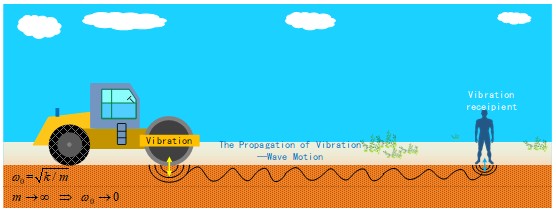
Figure 3: Wave Phenomena Generated by Vibratory Rolling
Given that embankment-type structures are not subject to the concept of natural frequency, the so-called “resonance theory” is, therefore, inapplicable. The vibratory action exerted by a vibratory compactor upon an embankment body serves only to propagate vibrations (dynamic stresses) outward to infinity; it does not induce the entire embankment body to vibrate as a unified entity. This scenario differs from the phenomenon of “resonance” that can occur in bridge structures (which are composed of beams and slabs of finite dimensions). (While wave phenomena can indeed propagate within beams and slabs, stress waves reflect back from the boundaries, thereby inducing vibration.)
When compacting earthworks, a vibratory roller typically operates at a working frequency of approximately 25 Hz to 35 Hz; when compacting asphalt mixtures, the operating frequency ranges from about 40 Hz to 70 Hz. These vibration frequencies are evidently far higher than the natural frequencies of typical structural bodies (such as bridges); consequently, resonance cannot occur.
Assuming the compacted fill body is of finite length (e.g., 100 m), if a natural frequency were to exist, its value would be extremely low — certainly incapable of reaching the 25 Hz to 35 Hz range, let alone the 40 Hz to 70 Hz range. Therefore, when a vibratory roller performs compaction operations, it does not induce a “resonance” phenomenon within the fill body as a whole. In other words, under the influence of compaction forces oscillating at 25 Hz to 35 Hz, it is impossible for the entire fill body to enter a state of resonance.
It is worth noting that, regarding the “resonance theory,” there is an alternative interpretation: the hypothesis that individual particles within the fill material may resonate under the vibratory roller’s influence, thereby enhancing compaction efficiency. Theoretically, there is indeed a possibility that certain particles within the fill material could undergo resonance; this depends on whether the natural frequencies of these specific particles align with the vibration frequency of the roller (as well as whether the particles’ spatial positioning allows for sufficient freedom of movement). However, the question of how to synchronize the roller’s vibration frequency with the natural frequencies of a diverse array of particles delves into the complex dynamics of particle vibration. This is a highly intricate issue, which will be briefly discussed below.
4. Natural Frequencies of Particles
Based on the principles introduced earlier, the factors determining a particle’s natural frequency are its mass and stiffness. The mass corresponds to the particle’s physical size, while the stiffness depends on its contact state with surrounding particles (which is correlated with the degree of compaction/density), as well as the particle’s specific shape, size, and spatial location. Let us now examine the motion dynamics of a single particle. Under the influence of vibratory loads, the mass (*m*) of a particle remains constant (provided it is not crushed); however, its contact relationships with surrounding particles are in a state of perpetual flux. This implies that its natural frequency (*ω*₀) is also constantly changing, as illustrated in Figure 4.
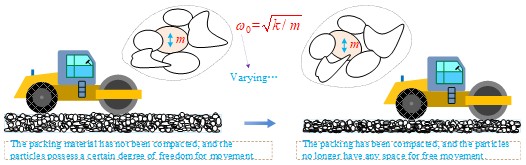
Figure 4: The Changing Natural Frequency of a Particle
Within a fill embankment, the number of particles is immense, their sizes and shapes are highly variable, their mutual contact relationships are unfixed, and their states of motion are complex. These conditions dictate that the natural frequency of each particle is likely unique and will, moreover, vary with the magnitude of the applied compaction force. This phenomenon is observed in virtually all types of fill materials.
Consequently, while it is theoretically possible—and indeed does occur—for a vibratory roller’s oscillation frequency to coincide with the natural frequency of an *individual* particle, thereby inducing resonance (though the actual efficacy depends on the compaction state; if particles lack sufficient freedom of movement, even resonance will yield poor results), it is virtually impossible for the roller’s frequency to simultaneously match the natural frequencies of *all* the particles within the fill. This implies that, in a practical sense, the so-called issue of “particle resonance” does not exist as a generalized phenomenon. (Note: In the case of coarse-grained materials, if the fine-grained constituents possess a certain degree of freedom to move, their oscillation amplitudes may increase; this facilitates their migration into the voids within the coarse-grained skeletal structure—a process whose specific effectiveness depends on the material’s particle composition and gradation.)
Although the compaction efficacy of a vibratory roller is not, in fact, attributable to “resonance,” vibratory compaction undeniably yields results far superior to those achieved through static compaction alone. For an explanation of this phenomenon, please refer to the analysis presented in the subsequent article.
A Side Note: In practice, research into fill embankments is invariably grounded in the principles of statistical mechanics—focusing exclusively on the macroscopic statistical outcomes of the collective interactions among all constituent particles. These statistical outcomes constitute the performance metrics for the fill embankment, serving as quantitative indicators of the aggregate effects of internal particle interactions (as discussed in previous articles).
(End of Article)