
Download PDF (English, Chinese)
Demystifying Intelligent Compaction Part II: Supplement—Performance Indicators and Interrelationships of Embankment Structures (1)

To better understand the necessity of utilizing modulus/stiffness to enhance process control during the rolling phase—and, by extension, the necessity of adopting intelligent compaction—we will first briefly review the relationship between the performance of embankment structures and the indicators used for compaction quality control. Before formally introducing intelligent compaction technology, this review will cover specific topics, including: indicators used to characterize embankment performance; acceptance criteria for compaction; indicators for compaction process control; the advantages and disadvantages of traditional point-sampling methods; and the circumstances under which the “degree of compaction” requirement may be waived. While these topics have been discussed in detail in the book *Intelligent Compaction*, they are briefly summarized and explained here across a series of installments.
1. What Indicators Characterize Embankment Performance?
For transportation infrastructure—such as highways, railways, and airports—elements like railway subgrades, highway subgrades and pavements, and airport runway pavements all fall under the category of “embankment-type structures” (hereinafter referred to as “embankment structures”). Their primary function is to uniformly support the repetitive application of traffic loads (from automobiles, trains, and aircraft) while ensuring structural integrity throughout their service life. This raises the fundamental question of how to evaluate an embankment structure—specifically, which indicators should be employed to characterize its performance (with a particular focus on how to characterize its capacity for uniform load support).
“Performance,” in this context, refers to the characteristics and capabilities manifested by the interrelationships among the system’s constituent elements (where the “system” is the embankment structure and the “elements” are the individual filler particles); it is an intrinsic property of the system itself. For a detailed discussion on systems, please refer to Chapter 2 of the *Introduction* volume within this book series.
For any given embankment structure, numerous methods and indicators exist to characterize its performance; different professional disciplines may employ distinct approaches and metrics. For instance, a chemist might propose one set of indicators, while a geotechnical engineer might propose another—yet the resulting indicator systems could be entirely disparate.
From the perspective of transportation infrastructure, an embankment structure primarily functions to withstand the repetitive effects of traffic loads and environmental factors (such as water and temperature). Based on these functional requirements, four key indicators can be utilized to characterize an embankment’s performance: strength, stiffness, stability, and uniformity. These four indicators can be broadly categorized into two aspects of “resistance” and two aspects of “maintenance,” as illustrated in Figure 1.
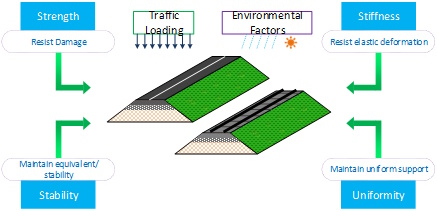
Figure 1: Performance Indicators for Embankment Structures
In structural mechanics, strength, stiffness, and stability are the three most critical indicators characterizing the mechanical properties of a structural body. These three indicators apply equally to embankment-type structures. However, it is essential to note that the specific meaning of these indicators must be correctly interpreted, considering the unique force-bearing characteristics of the structure in question.
Regarding strength: in the context of general structural bodies, it refers to the ultimate load-bearing capacity [σ]. However, in the field of road engineering, its true meaning should be interpreted as the number of repetitions of a standard axle load that the structure can withstand (Note: The method for determining strength mentioned in the book *Intelligent Compaction* is presented from the perspective of soil mechanics and is not applicable to the determination of strength for road structures; see p. 3). In practical terms, this equates to the concept of service life.
Stiffness is used to characterize an embankment structure’s ability to resist elastic deformation. In elastic theory, stiffness is represented by the elastic modulus. For embankment structures—which are not ideal elastic bodies—this gives rise to the concept of multiple moduli. These primarily include the Resilient Modulus (E), the Secondary Deformation Modulus (Ev2), the Dynamic Modulus (Evd), and the Winkler Foundation Reaction Modulus (K30, also known as the subgrade reaction coefficient). As to which specific modulus should be used to characterize stiffness, choices vary across different countries and disciplines; there is no single, universal standard. In China, highway engineering utilizes the Resilient Modulus (E) for mechanical calculations, while railway engineering employs K30 for compaction quality control. European standards, conversely, utilize the Secondary Deformation Modulus (Ev2), while the Dynamic Modulus (Evd) is primarily used for controlling the compaction process itself.
Stability refers to the property wherein an embankment structure’s physical and mechanical characteristics do not undergo significant changes over time. Fundamentally, it represents the structure’s ability to maintain a state of equilibrium—or, alternatively, its resistance to external disturbances. Stability typically refers to *mechanical stability*: the property that, under the influence of traffic loads, the embankment structure’s stiffness does not vary significantly over time. However, for materials sensitive to moisture content (such as cohesive soils), *moisture stability* must also be ensured (a requirement that introduces the concept of “degree of compaction,” also known as the compaction coefficient). Similarly, for materials sensitive to temperature (such as asphalt mixtures), *thermal stability* must be ensured (a requirement that introduces various specific indicators used to characterize the high- and low-temperature performance of asphalt mixtures). The primary reason for emphasizing moisture and thermal stability is to ensure that the embankment’s mechanical properties—specifically stiffness—do not change significantly when exposed to water or temperature fluctuations. Fundamentally, this remains an issue of mechanical stability, albeit one that explicitly accounts for the natural environment’s influence.
The criterion of uniformity is specifically formulated for “linear” infrastructure projects, such as highways and railways. If the properties—primarily mechanical properties—of the completed embankment are unevenly distributed across its surface, it implies a variation in strength and stiffness, resulting in a loss of uniform load-bearing capacity. Under repeated traffic loading, areas with weaker properties will experience excessive deformation; in severe cases, this may lead to shear failure (manifesting as settlement or permanent deformation), thereby posing safety risks to both the superstructure and vehicular traffic. For these reasons, it is imperative to control compaction uniformity during the construction process (quantitative assessment methods exist for this purpose; please refer to subsequent articles), thereby eliminating non-uniformity during the construction phase itself. The foregoing outlines four key performance indicators derived from the specific characteristics of embankment-type structures within transportation infrastructure. However, for structures that have already been completed, accurately assessing these four